- Nimitz Tech
- Posts
- Nimitz Tech - Weekly 04-13-2026
Nimitz Tech - Weekly 04-13-2026
From Anthropic’s legal fight to new AI breakthroughs, here’s what’s shaping the policy landscape.
This week’s developments underscore how quickly technology policy is evolving across Washington and beyond, as lawmakers, regulators, and industry leaders grapple with the real-world implications of advanced AI, shifting market dynamics, and emerging global standards. From ongoing legal battles over the use of AI in national security to new model releases that are testing the boundaries of safety and capability, policymakers are being forced to confront both the opportunities and risks of rapid innovation. At the same time, changes in energy, transportation, and semiconductor policy highlight the growing intersection of technology with broader economic and infrastructure priorities. Below is a look at the key stories and hearings shaping the tech policy landscape this week.
In this week’s Nimitz Tech:
Anthropic-Pentagon dispute: A federal appeals court allowed the Defense Department to maintain its “supply chain risk” designation on Anthropic, keeping the company sidelined from new Pentagon contracts as litigation continues over the use of AI in national security.
Next-generation AI models: Meta released its new Muse Spark model as it works to close the gap with leading developers, while Anthropic withheld its latest model over cybersecurity concerns, signaling growing tension between rapid innovation and safety risks.
EV and energy policy shifts: Volkswagen’s decision to scale back U.S. EV production highlights the impact of changing federal incentives and market demand on the broader energy transition.
WHO’S HAVING EVENTS THIS WEEK?

Red: House event
Blue: Senate event
Wednesday, April 15th
House Education and Workforce: “Building an AI-Ready America: Understanding AI’s Economic Impact on Workers and Employers” at 10:15am. Watch here.
House Energy and Commerce: “Computing Power and Competition: Examining the Semiconductor Ecosystem” at 2:00pm. Watch here.
Senate Energy and Natural Resources: “Hearings to examine S.465, to require the Federal Energy Regulatory Commission to reform the interconnection queue process for the prioritization and approval of certain projects, S.1327, to require the Federal Energy Regulatory Commission to establish a shared savings incentive to return a portion of the savings attributable to an investment in grid-enhancing technology to the developer of that grid-enhancing technology, S.3034, to amend the Federal Power Act to require the Federal Energy Regulatory Commission to review regulations that may affect the reliable operation of the bulk-power system, S.3192, to require Transmission Organizations to allow aggregators of retail customers to submit to organized wholesale electric markets bids that aggregate demand flexibility of customers of certain utilities, S.3269, to direct the Comptroller General of the United States to conduct a technology assessment focused on liquid cooling systems for artificial intelligence compute clusters and high-performance computing facilities, S.3947, to amend the Federal Power Act to establish a categorical exclusion for reconductoring within existing rights-of-way” at 2:30pm. Watch here.
Thursday, April 16th
House Select Subcommittee on China: “China’s Campaign to Steal America’s AI Edge” at 11:00am. Watch here.
Friday, April 17th
House Armed Services: “Science, Technology, and Innovation Posture of the Department of Defense” at 9:00am. Watch here.
TECH NEWS DRIVING THE WEEK
In Washington
A federal appeals court denied Anthropic’s request to block the Department of Defense from labeling the company a “supply chain risk,” allowing the designation to remain in place while litigation continues. The ruling marks an early victory for the Trump administration in a dispute stemming from failed contract negotiations over the use of artificial intelligence in classified military systems, during which Anthropic sought to impose limits on applications such as domestic surveillance and autonomous weapons. The designation effectively bars Anthropic from new Pentagon contracts and has prompted the Defense Department to begin removing its software, though a separate federal court in California recently allowed the company to continue certain existing contracts. While the appeals court acknowledged potential harm to Anthropic, it determined the legal standard for relief had not been met, leaving the broader legal challenge unresolved amid conflicting court rulings and ongoing debate over government authority and AI use.
National
Meta unveiled a new flagship artificial intelligence model, Muse Spark, marking the first release from its recently overhauled “superintelligence” lab as the company seeks to compete with leading developers like OpenAI, Google, and Anthropic. The model showed significant improvements over Meta’s previous systems in writing and reasoning tasks and performed nearly as well as. top competitors, though it lagged behind in coding capabilities, an area of increasing focus across the industry. The launch reflects CEO Mark Zuckerberg’s broader push to invest heavily in AI, including billions spent on talent recruitment and infrastructure, as well as a shift away from prior priorities like the metaverse. Unlike earlier Meta models, Muse Spark is not open source, though the company said it may release components in the future, and it will be integrated across Meta’s platforms, including WhatsApp and Instagram.
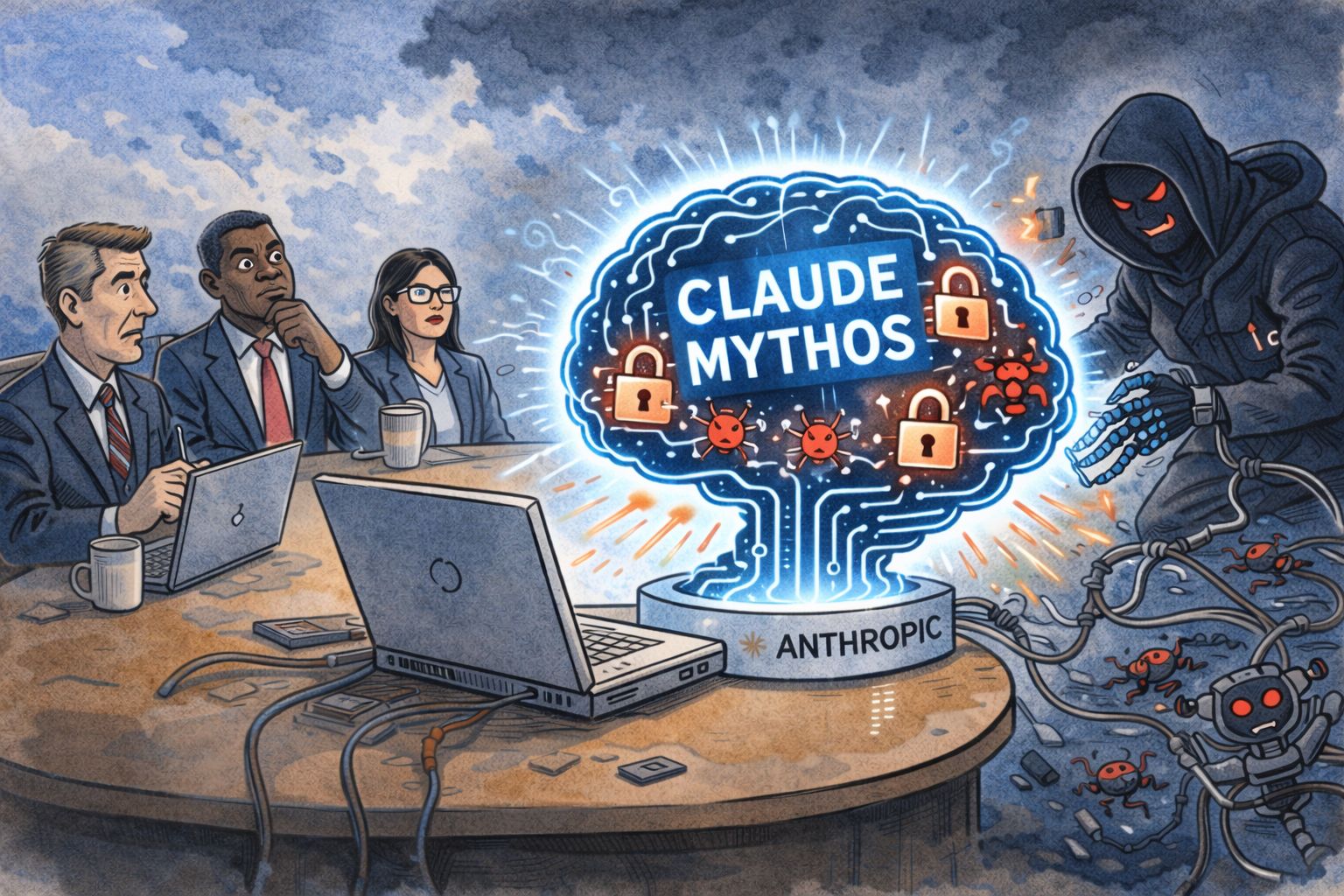
Anthropic announced it has developed a new artificial intelligence model, Claude Mythos Preview, that it considers too powerful to release publicly due to its advanced cybersecurity capabilities, including the ability to identify and exploit software vulnerabilities. Instead, the company is providing limited access to a consortium of more than 40 organizations through an initiative called Project Glasswing, aimed at helping detect and fix security flaws in critical systems. Anthropic said the model represents a significant advancement in AI capabilities, having already identified thousands of vulnerabilities—including longstanding bugs missed by human researchers and automated tools—and warned that such technology could accelerate both defensive and malicious cyber activity. The move reflects broader concerns within the industry that increasingly powerful AI systems could fundamentally alter cybersecurity dynamics, potentially requiring widespread updates to existing software infrastructure.
Volkswagen announced it will stop producing its ID.4 electric vehicle at its Chattanooga, Tennessee plant and instead focus on manufacturing a new gasoline-powered SUV, citing declining demand following the expiration of federal EV tax credits. The decision reflects a broader trend among major automakers, including General Motors, Ford, and Stellantis, that have scaled back electric vehicle plans as sales have fallen short of expectations. Volkswagen reported that U.S. ID.4 sales dropped more than 60 percent year-over-year in late 2025, though the company said it has sufficient inventory to meet demand through at least 2027 and may introduce a future EV model without confirming production location. While some automakers continue expanding EV offerings and recent increases in gasoline prices have driven renewed consumer interest, Volkswagen’s move highlights the impact of shifting federal policy and market conditions on domestic EV production.
International
Dutch regulator RDW announced it will seek European Union-wide approval for Tesla’s full self-driving (FSD) software after granting it approval in the Netherlands, marking a potential first step toward broader adoption across Europe. The system, which allows vehicles to steer, brake, and accelerate under human supervision, is classified as driver-assistance technology rather than fully autonomous driving, and the European version will include stricter safety requirements, such as enhanced driver monitoring and regulatory review of software updates. The European Commission is expected to review the proposal in May, and if approved, it could enable an EU-wide rollout, while individual member states may also adopt the technology independently using the Dutch approval as a benchmark. The move comes as Tesla looks to boost sales in Europe amid slowing demand, with the company positioning its self-driving software as a key differentiator.
ADD TO THE NIMITZ NETWORK
Know someone else who would enjoy our updates? Feel free to forward them this email and have them subscribe here.
Additionally, if you are interested in our original publication on veterans affairs policy, check it out below:
|
